Features
What the Director didn’t approve
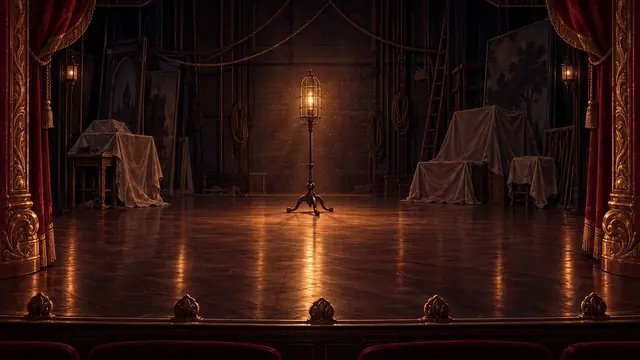
A visual novel built like a stage production: a narrator who performs, a company that remembers, and a story engine that keeps the receipts.
The stage
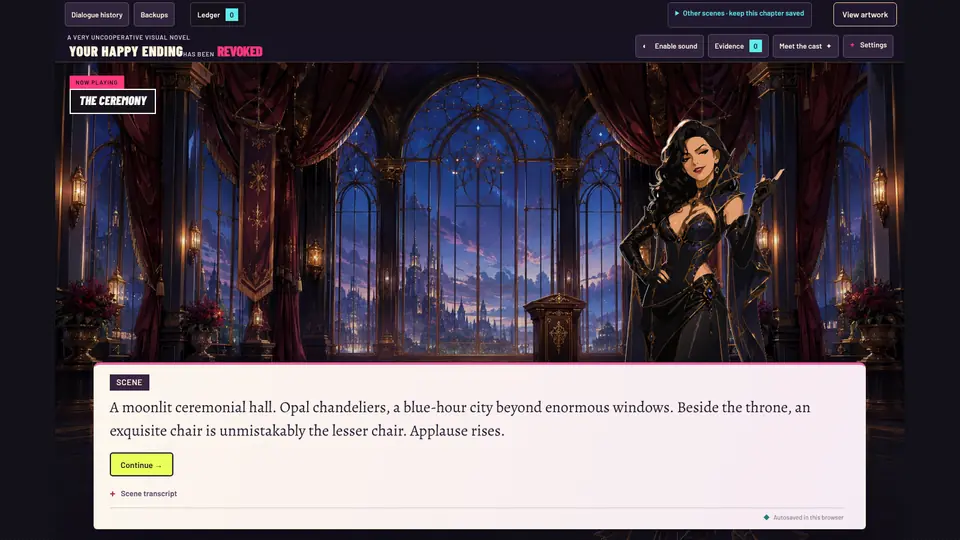
A painted stage on any screen
Every scene is a full-art set with the cast in front of it and the reading panel underneath, laid out like a theatre rather than a phone app.
- A fixed 16:9 stage, up to 1536 by 864, letterboxed cleanly on ultrawides, laptops, tablets and phones.
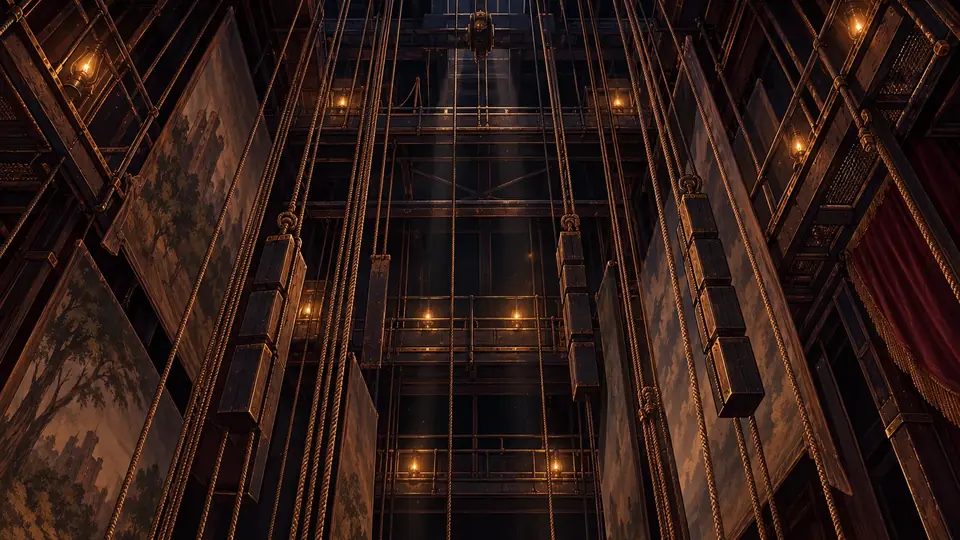
- Hand-directed backdrops for every set, from the moonlit ceremony hall to a property store in orbit.
- A transcript of the scene so far, a dialogue history and an evidence drawer, one tap away.
Sound
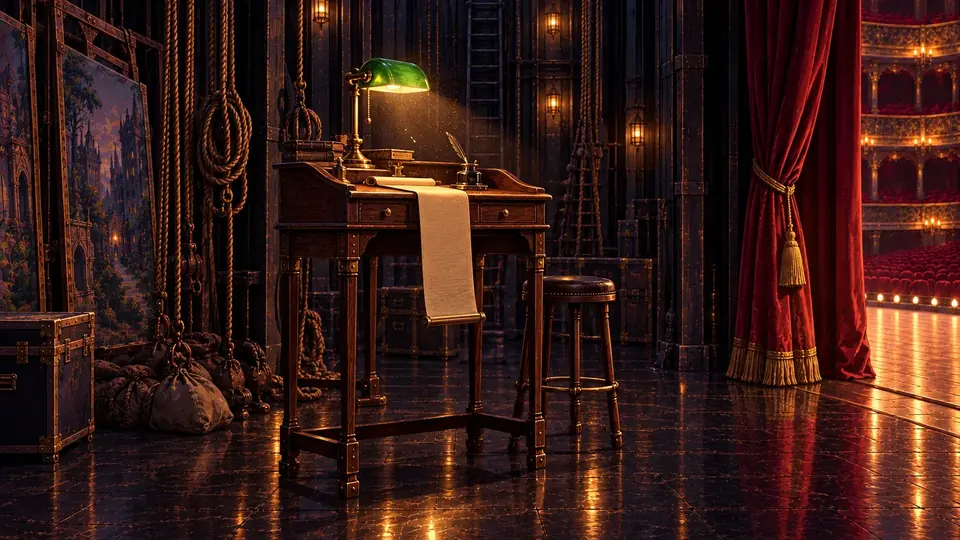
A narrator who performs every line
The Director narrates, interrupts and sulks. All 4,919 of his lines across 64 episodes are recorded, each one directed for its emotion rather than read flat.
- The music dips gently under speech and comes back up when he stops.
- Scenes with no score keep the low hush of a real room instead of dead silence.
- An original main theme, a commissioned score for each family of sets, and sixteen sound effects with their own volume and mute.
- Thirty-seven parts written for human actors. Casting is open now.
Listen
The Director, in his own words
Real lines from the game. Nothing plays until you press play.
“Encore! Oh, bless you. And I was so afraid you had learned something.”The Director, at the registry
“The blocking lacks direction. There is altogether too much possibility of people going somewhere I have not indicated.”The Director, at the company’s show
“An appointment made without a crisis. What a terrible waste of formal clothing.”The Director, on Mirabel’s night off
Performance
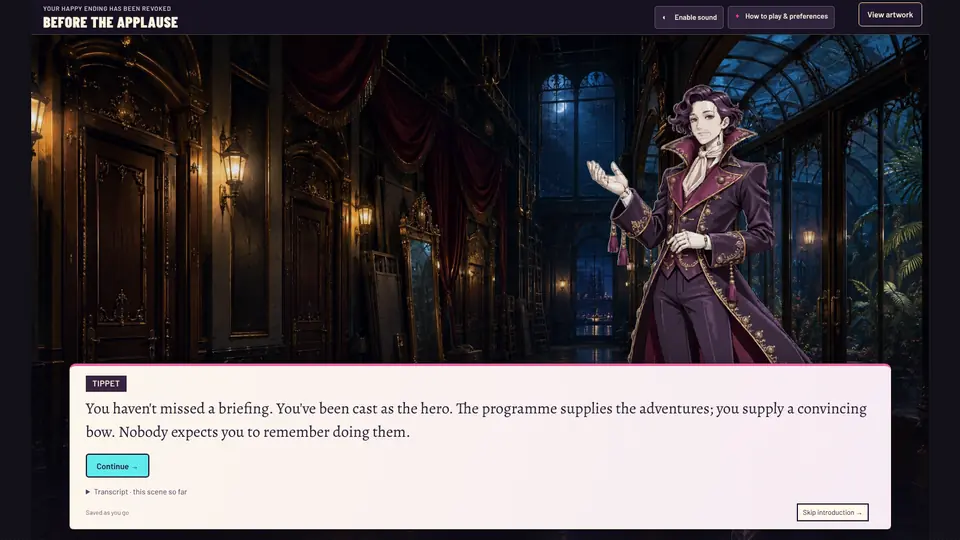
Faces and poses for the line, not the scene
The cast act. Each line picks the expression and the carriage that suit it, so a smirk lands on the joke and the shoulders drop on the confession.
- Directed expressions and poses, chosen line by line across the whole cast.
- Hands free when the moment is personal: nobody clutches a prop through every pose.
- Costumes change with the genre. Vivienne alone has a gown, a tricorn, a ruff, a shirt dress and a fighting sash.
Story engine
Branches that rejoin without forgetting
Written in ink, the narrative scripting language from inkle, and run by a story engine that treats every choice as a fact on the record.
- Paths split and come back together with their consequences intact. A broken promise stays broken in the next episode.
- A ledger of what is owed, kept and broken, read aloud as the credits roll.
- Three runs: the second opens a career in villainy; whoever got out last time is missing next time; by the third, the Director admits he has seen this before.
- More than a dozen endings, and one that only exists when nobody is left to pull on.
Saves and access
Yours, on your device, readable your way
There is nothing to install and nothing to sign up for. Progress saves after every choice and stays in your browser.
- Autosave at every committed action, safe recovery when the story is updated, and backups you can download and restore.
- Reduced motion, larger text and a softer-language mode.
- Play entirely from the keyboard. Dialogue is announced to screen readers as it appears, and cutscenes are captioned.
- Skip anything you have already read on a later run.
Under the floorboards
How it is built
Browser first, with no plug-ins, no app store and no server holding your progress.
- ink and inkjsSixty-four separately compiled stories, each with stable line and choice identities so saves survive rewrites.
- ReactThe reading panel, choices, drawers and settings, all real HTML for keyboards and screen readers.
- PhaserRenders the stage and the cast on canvas, with the camera and lighting in one place.
- TypeScript and ZodOne controller owns the game state and validates every save before it is written.
- IndexedDBAtomic save transactions in your own browser, with stale-tab protection and readable backups.
- CloudflareDelivered from the edge; pictures, music and voices from a dedicated media host.
See it on your own screen
Free in your browser. Turn the sound on; he’s been rehearsing.